

The goal of lead generation is to generate sales, revenue and customers. Especially for small businesses. Yet, many fall into the trap of vanity metrics. Likes, reach and followers. Marketing specialists and professionals may also end up falling into the trap of measuring everything, obsessed with dashboard metrics… and end up measuring nothing.
I shall start by illustrating the main four ways, that I borrowed from Alex Hormozi, that you can generate leads. There are no free leads. Every activity has a time cost, and in turn a monetary cost. Yes, even by doing “free marketing” like posting content, there is a cost.
The good news is that this will help you with a cost per lead, and eventually an acquisition framework, with lead generation metrics and KPIs that you can measure.
The Alex Hormozi’s Framework: Four Ways You Can Generate Leads
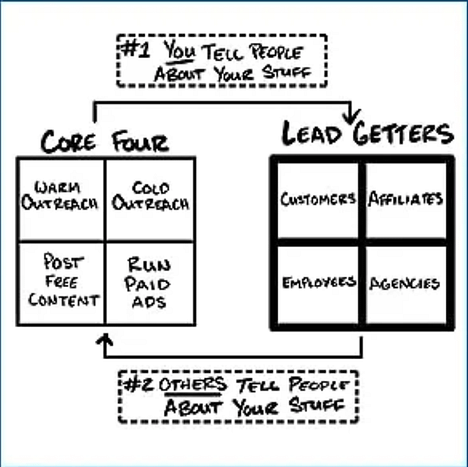
To borrow from Alex Hormozi’s framework, the four ways to get leads are: 1) warm outreach 2) cold outreach 3) post free content, and 4) run paid ads.
Every single channel of them can be reduced to a cost per lead model. Yes, even free content!
Look, scripting, crafting, shooting and editing that short reel video for Instagram or writing that Linkedin post still costs you time. Your time has an hourly value. As a result, there is a real, measurable cost per lead attached to it. This matters because once everything is in the same unit, cost per lead, you can finally make measured decisions about where to put your effort (and money).
The Core Lead Generation KPIs That Actually Matter
Many small business owners I spoke to through the years start off with the entirely wrong metrics. They count leads generated and celebrate when the number goes up. They panic when it drops.
The key thing to note is that a lead is not a customer. The more leads you generate, it does not automatically equal more revenue.
If you’re running any kind of paid online lead generation, whether it’s Google Ads or Facebook Ads… you need to know what numbers actually move the needle.
Many service based businesses also complain that they can get leads, but they aren’t qualified. Then that begets an age old question:
How to Define a “Qualified Lead”?
This is contextual and depends on each business.
If you’re a law firm, a qualified lead may be someone who has a specific legal problem and has explicitly filled in a customer intake form. The customer also explicitly ticks the box that says he/she is looking for professional representation. If you’re a psychologist that runs a clinic, it can mean that someone paid a token sum for a first psychotherapy trial session.
There are many ways to define a qualified lead.
For our digital marketing agency, we define it as when someone took the time and effort to fill up our Jotform questions before they book a call with us.
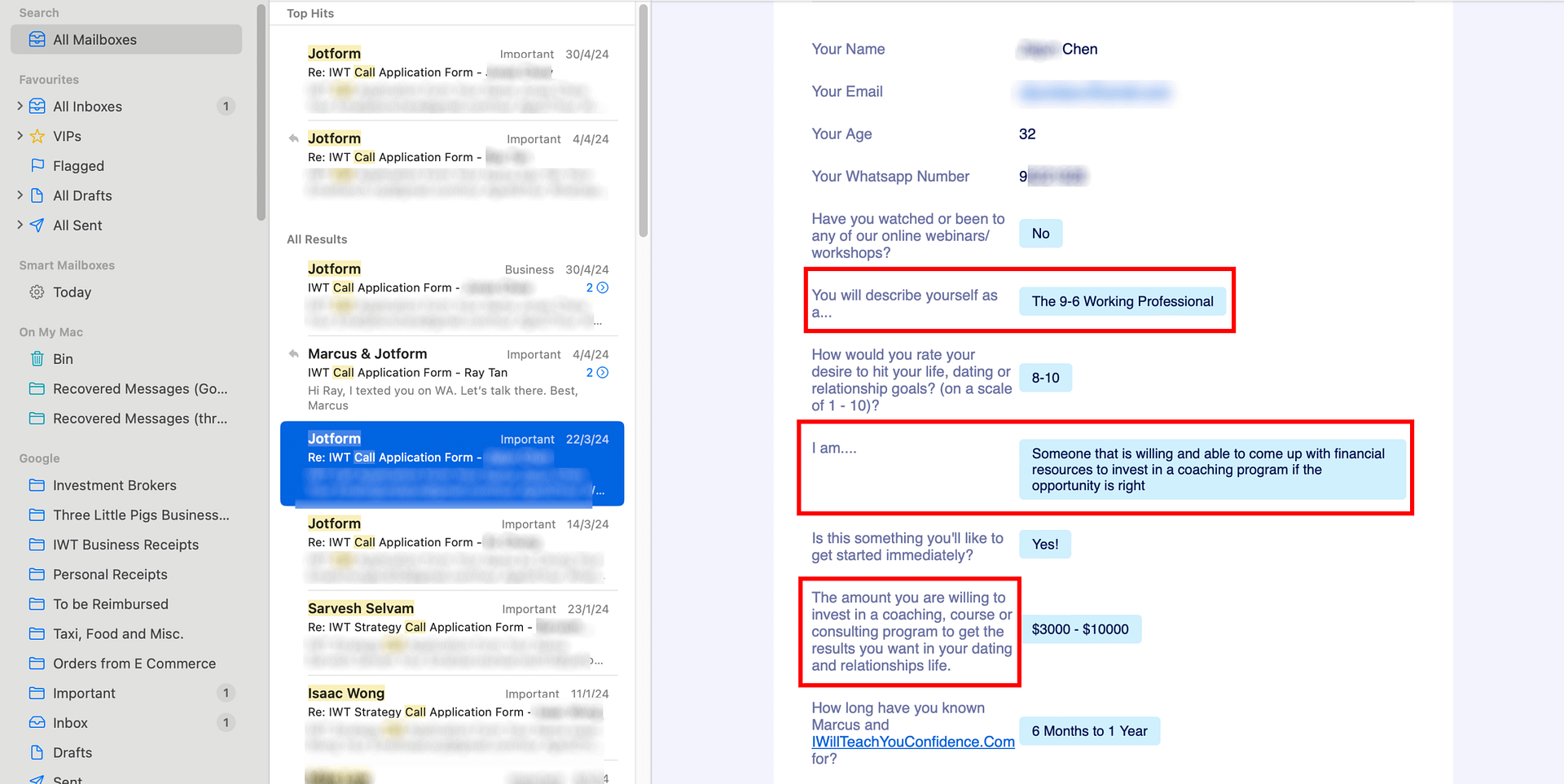
In my opinion and experience, a user who has taken the time and effort to fill up a form with qualification questions on intent and affordability is a far more qualified lead.
As an agency, we define a qualified lead with our customers before we run a single dollar of ad budget. This way, there is clarity on key performance indicators. It is important for our customers to know that we are focused on helping them get high quality leads that turn into sales and revenue, not just social media likes or reach.
Cost Per Lead (CPL) by Channel
I was handling million-dollar budgets when working as an E-Commerce Specialist for an MNC. There, we had quite a media mix, and at one point, we were splitting our budgets across 5 to 8 marketing channels for just one product.
As a marketer, I had to define the different acquisition costs by channel. Just within Google, we had ‘branded’, ‘competitor’, and ‘generic’ campaigns. Then we had PMAX and YouTube.
These sub channels on one platform led to different costs per lead.
Cost per lead or per sale on the ad dashboard is a good gauge at first glance. Simply take your total spend on a channel and divide by the number of leads or sales it produced. If you spent $1000 on Facebook Ads and got 20 leads, your CPL is $50.
Yet, cost per lead doesn’t paint the full picture. It can only give you a rough guide and a north star.
The Most Important Metric: Customer Acquisition Cost (CAC)
Cost per customer acquisition is the real number that actually determines whether your business is profitable. CAC tells you what it actually costs to turn that person into a paying customer.
How to Calculate CAC Properly
Customer acquisition cost is fundamentally how much it costs you to acquire a new customer.
Total Marketing Spend ÷ Number of New Customers = CAC
Most businesses undercount CAC because they forget to include agency fees, freelancer costs, sales commissions, software tools, offline events and creative production.
The definition of CAC is not set in stone. In my view, total variable costs to acquire a customer is a good starting point.
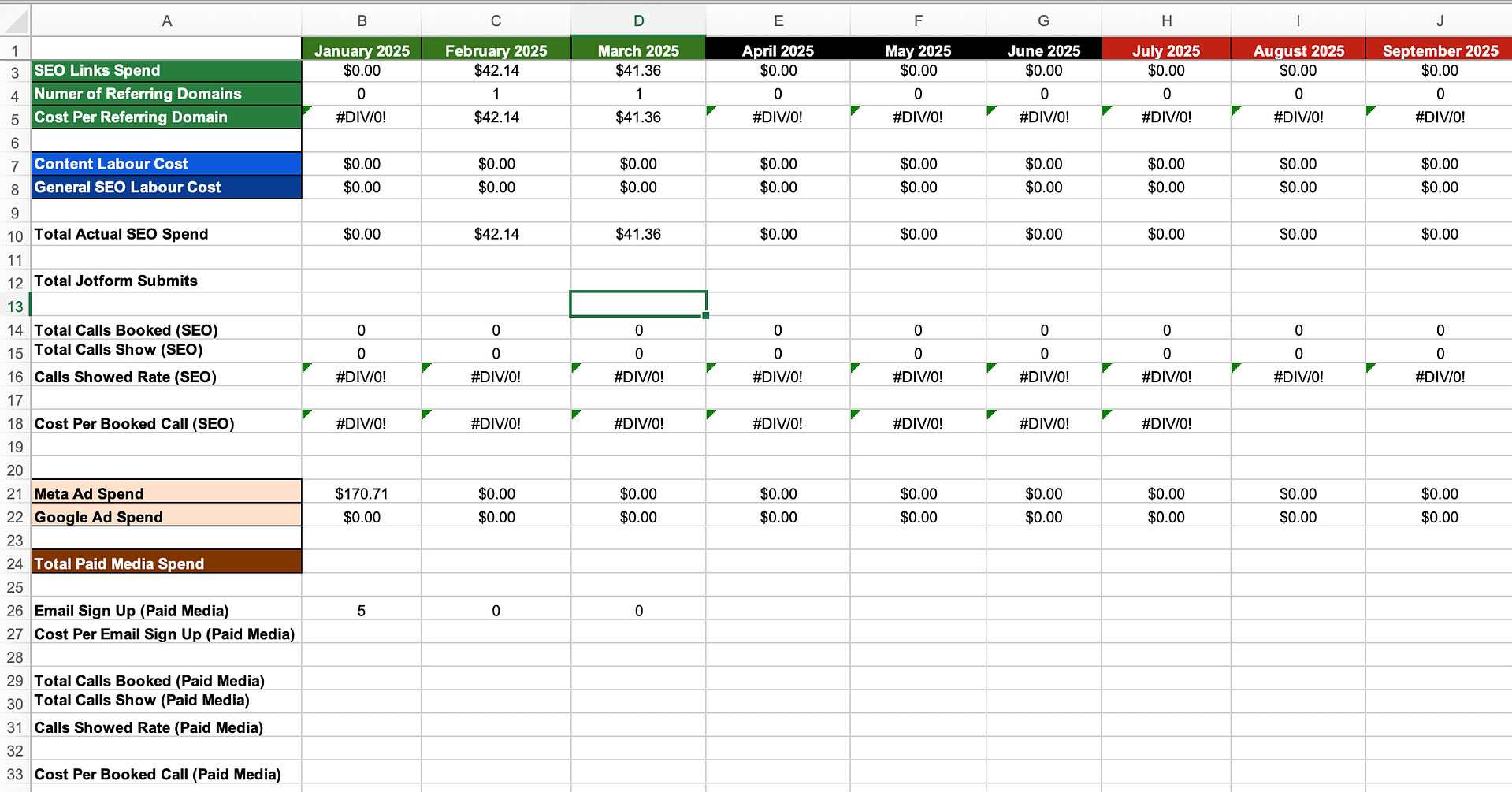
Getting your CAC provides a fuller picture, but we also want to look at cashflow.
Cashflow is the lifeblood of any business.
Let’s move on to two other metrics: average order value (AOV) and lifetime value (LTV). Then we’ll look at how these compare against CAC.
AOV : CAC Ratio – The Cashflow Test
Your Average Order Value (AOV) can be defined as the revenue you collect from a client in the first 30 days.
For a dentist, that might be an $80 consultation and teeth cleaning. For a private GP clinic, it could be a $60 walk-in visit including basic medication. For a law firm, it may be a $300 initial consultation.
Ideally, you want your cost per customer acquisition (CAC) to be below or breaking even with your average order value (AOV). This means that if you’re spending $200 to acquire a client who pays you $200 for an initial consult, and that leads to further purchases, you’ll be profitable after.
If your CAC is $1000 but your AOV is only $200, that’s five times the revenue collected on the first transaction. You may find it difficult to be profitable even after further purchases. This ratio may mean that your marketing campaign isn’t messaging the right things to the right audience.
You are losing money on every single customer’s first transaction. This may lead to a cashflow problem.
I usually don’t want to tell myself that I am an Amazon or a tech startup that can afford to burn cash and bet on repeat purchases that may never come. In my experience as a small business owner, you want to ensure that you’re near the break-even ratio.
LTV : CAC Ratio – The Profitability Test
Let’s move on to lifetime value (LTV). Life time value can be defined as the revenue collected from a customer over 365 days, or over the entire relationship with your business.
If you spend $1000 to acquire a client, that client should be worth more than $1000 to your business.
Take a dental clinic as an example. You run a campaign and five patients come in for a routine teeth cleaning at $80 each. That’s $400 of revenue in first transactions. On first look, if your CAC is $200 per patient, you’ve spent $1000 to make $400. That looks like a loss.
However, one of those five patients returns for a root canal treatment at $1500. Then a crown treatment for another $1000.
Suddenly, the numbers look different. You are profitable and that’s the lifetime value (LTV) of a customer working for you.
Note: Many Lead Generation Metrics Are Vanity
Many business owners obsess over vanity metrics such as likes, follows, and most commonly, cost per lead. Whether that number went up or down.
However, none of that tells you anything useful if you do not know how many of those leads converted, whether they were satisfied, or whether they left a review.
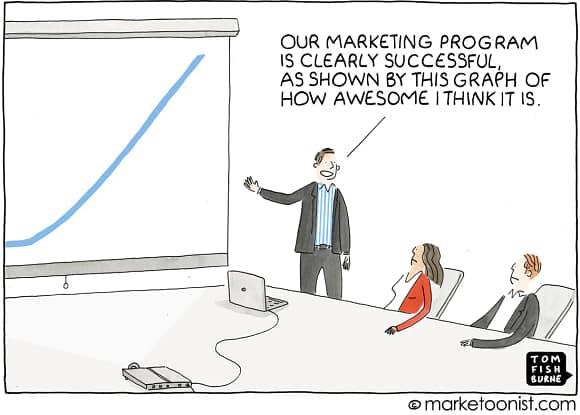
Hence, even if you deploy online lead generation as a client acquisition campaign, it is also the goodwill generated by your service satisfaction, and not just Facebook or Google Ads, that will bring your business to the next level.
How to Actually Measure Lead Generation: Lead Source Attribution
It’s not uncommon for small businesses to not have attribution set up. Yet, it’s important. Attribution tells you which channel deserves the credit for a lead.
For this article, I am not going to dive too deep into the technicals, but there are three common attribution models.
First touch attribution gives full credit to the first channel a customer interacted with. If someone found you through a Google search, Google gets the credit, even if they later clicked a Facebook ad before signing up. Last touch attribution does the opposite.
Multi touch attribution splits the credit across every channel the customer interacted with along the way.
Initially, our goal should be to define which channel gets the lead credit, before diving too granularly into first/ last/ multi touch attribution.
Set Up Proper Tracking
For us, because we run ads and want to differentiate leads generated from local SEO such as your Google Business Profile versus our Facebook advertising campaigns, we install Google Analytics 4.
GA4 can track user behaviour on your website and attribute the channel which the lead comes from.
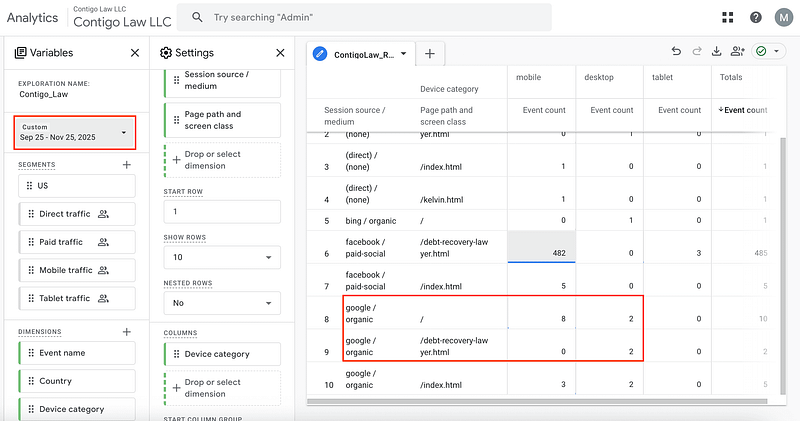
For online lead generation campaigns, you’ll want to add UTM parameters to your ad links. UTM parameters help attribute which channel and campaign your lead came from.
Set Up CRM and Feedback Loop
Lastly, set up a basic CRM that ties together lead generation and lead management. You will want to know the lead source, the date of first contact, and the current stage of the lead. This is to help your team follow up on leads down the road.
I recommend a simple setup in HubSpot or a well organised Google spreadsheet. For our lead generation services, we provide a complimentary Google spreadsheet CRM for our clients.
That is because sales and marketing work best with a feedback loop. Sales are exposed to clients and can report back to marketing on their objections and concerns. Then marketing can refine its lead acquisition process.
Lead Generation Metrics for Service Based Businesses
Once again, not every business measures lead generation similar. Today a law firm and a dental clinic can both run Facebook ads, but metrics that matter to each of them are different.
Law Firm Marketing Metrics
Our legal marketing case study ran ads to a WhatsApp button enquiry. Of those who clicked, how many actually requested a complimentary consultation? Then of those who requested a free consultation subsequently paid for legal services?
Healthcare Marketing Metrics
When marketing for clinics and private practices, patient show rates are an important metric. Today, a patient who books but never walks through the door costs the clinic more than just a cancellation. That appointment slot could have gone to someone else.
B2B Metrics
In B2B sales, deal size may matter more than lead volume. A $20000 contract that takes two months to close is a very different animal from a $500 consumer facing sale.
You may only need a couple of qualified leads a month to hit your revenue targets. In B2B lead generation, lead quality may matter more than lead quantity.
If you build a bloated pipeline of unqualified leads, this will waste your sales team’s time and skew your numbers. You want leads that match your ideal customer profile, have the budget, and are looking for a solution.
There’s also the factor of sales cycle length. If your average deal takes three months to close, you cannot judge a campaign after four weeks. Your attribution window needs to reflect your actual sales cycle.
Conclusion
Today, lead generation is not just about the number of leads or cost per lead. It is about the quality of customers you acquire and whether they stay long enough, or pay you enough, over their customer lifecycle.
Finally, do not let analysis paralysis hold you back. Install the basic tracking, define the metrics and what a qualified lead looks like. Make a best guess of your desired CPL, CAC, AOV and LTV, and you are good to launch! Ready! Fire! Aim!
