Have you ever read a sales page, an email from a company, a product description on Amazon, listened to a seven minute YouTube video or clicked on a Facebook ad whilst browsing through your Facebook newsfeed? They all fall under one umbrella: copywriting.
Yes, copywriting is a foundational building block of the art of advertising.
Copywriting is in the script of Facebook marketing videos. It is used to create a script to post a video on TikTok. It is in your long form SEO optimised blog tutorials. It’s in your long form sales landing page. It’s in your video sales letter videos. It’s in your emails when you cold outreach to a potential B2B prospect.
I’ve published commentaries for ChannelNewsAsia, written personal finance articles for my previous employer DrWealth.com and launched ad campaigns that resulted in 3x to 5x sales… all from understanding the basic building blocks of copywriting.
Good copywriting is the art of persuasion through words.
Good Copywriting Comes from Customer Research
Today, it is not uncommon for every other digital marketing agency to market the “fast,” run of the mill lead generation tactics such as “running Facebook Ads.” Launch ads and you’ll make a million dollars, GUARANTEED!

It’s not that media buying on ad platforms like Meta doesn’t work, but most do it without considering WHY people purchase, become potential prospects, click on ads and fill in your contact forms in the first place.
When I started my first business, I used SEO and outranked all my competitors within six to eight months… and yet I had ZERO sales. I had traffic but no sales!
Then, I figured traffic is only one part of the equation.
It took me YEARS to realise this secret: the best copy is based on customer research!
Customer research:
- Who is your ideal client
- What do they look like
- Their age range
- Job status
- Job positions
- Spending ability
- Their ability and willingness to pay
- What are their hopes, fears and dreams
- The exact language they use when describing their problems in your market
To produce GREAT copy, you have to first understand the language of your market and then put that down into copy.
This is going to make the ENTIRE difference between a lead generation campaign that works, and a campaign that does not. This is regardless of which traffic channel you media buy from.
For example, the goals, needs and language used by customers engaging smaller law firms as opposed to MNCs engaging Big Four branded law firms are different. There are clearly different ideal client profiles.
The Art of Positioning, Illustrated by Good Copy
Now that you have customer research, you can figure out your position in the market. Then copy helps illustrate that.
Positioning is determined by 1) how your company is different, better or unique as compared to your competitors, and 2) what the market thinks of you.
For example, for our legal marketing services, we differentiate ourselves by paying attention to the unique challenges of Singapore’s legal industry, such as the Legal Profession’s advertising restrictions and guidelines.
I used to go around screaming about how important SEO is to small business owners without understanding that SEO is just one part of the marketing puzzle. I attended paid SEO courses, paid thousands for certifications and thought that business owners would trust me if I was SEO certified. Sounds familiar, especially for skilled professionals in skilled industries?
I didn’t understand the concept of positioning.
I was going up against hundreds of other “SEO experts” pitching $500 a month SEO deals, guaranteeing Google page one rankings within weeks.
Instead, I should have invested time in understanding positioning. How am I, as a digital marketer and SEO practitioner, different?
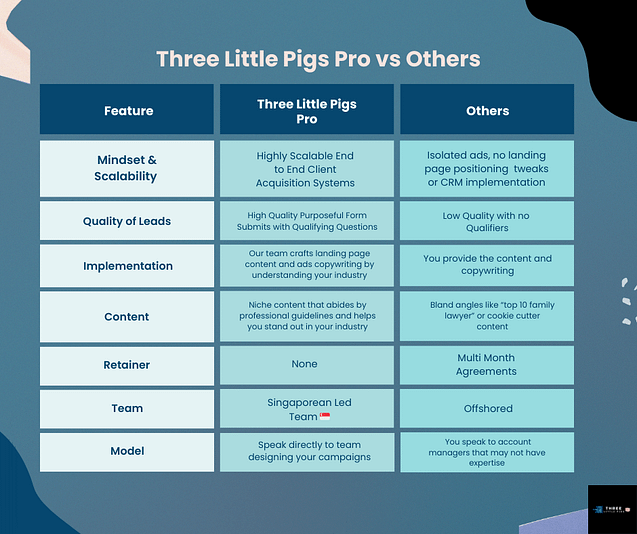
Secondly, through understanding what customers say (or don’t say) about your services and products, you’ll be able to roughly make a good guess on your “positioning” in your marketplace. You then use copy to highlight, accentuate or reposition your products and services to the marketplace.
In my feedback from the market, customers usually tell me I am direct and result oriented. Yes, I can be blunt. Not all are going to be comfortable with my manner of communication. But that’s okay. I guess that’s my positioning in the market. What is yours?
How to Write Great Copy: The Language of Your Audience
So Marcus… how can I figure out the language of my audience? You mean I have to listen to HOW they speak? Yes, that’s exactly what I meant.
It is as simple and straightforward as paying attention to the EXACT words your prospects, leads, audience, and existing or potential customers are using. What are their goals, fears and common objections when it comes to your service or product?
This is super important data!
1) Send Out Surveys to Your Existing Customer Database
You can learn about your customers by surveying them. You can send out an email to your current database in exchange for a gift voucher for an anonymous survey. I get on calls with leads and potential clients one to one and I pay attention to what they say to me and the exact language they use.
You’ll want their words, NOT your interpretation of them. The key here is real life conversations!
You should always be listening to customer responses and feedback! Yes, behind all the fancy analytics, these are real human beings!
2) Facebook Groups, Forums, Communities and Reddit Conversations
Google “X keyword + Forum” and look at the threads on a forum, Facebook group and community. Pay attention to the actual phrases and terms people use. Their hopes, dreams and fears.
You look into:
- Comment sections on Amazon reviews of similar products
- Reddit or other online posting sites
- Facebook groups
- Online communities
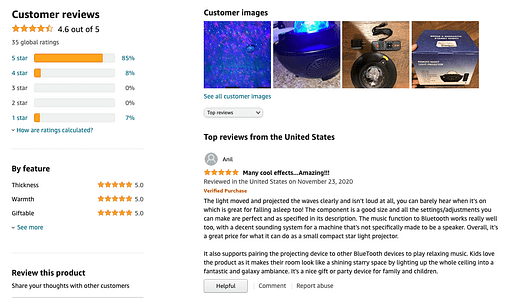
The gold is to read poor one star or two star reviews, then try to position your product in a way that addresses these pains.
For example, I spent some time reading other digital marketing agencies’ Google reviews. Especially the eye catching ones that promise an unlimited number of marketing tasks for an irresistible flat fee. It’s almost always customers complaining of overpromises and undeliverability.
Hence, instead of positioning my business through an irresistible offer of unlimited marketing tasks, I am careful about what projects, customers and industries I choose to take on. As an agency, we always want to be a win win for our customers, making sure you get a return on investment on your marketing spend.
The Frameworks of Successful Copy
I shall make a confession. Good copywriters aren’t reinventing the wheel. They aren’t exactly creative wizards. However, they are great listeners.
You don’t have to be scammy or flashy to write great copy. Here are the frameworks I keep in mind when writing just about anything from a sales page to a blog post.
Copywriting Skillset 1: Specific and Vivid Descriptions
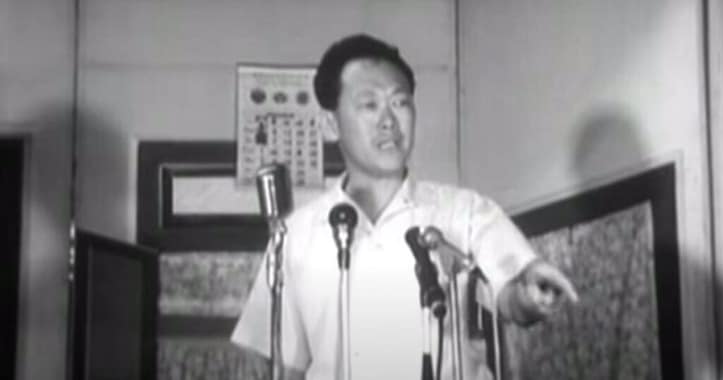
Great copy relies on specific and vivid descriptions. If you noticed, Mr Lee Kuan Yew always used specific, real life and vivid descriptions to get his message across. Instead of relying on some esoteric statistical data, he used real life, day to day imagery.
“Any government that makes plans on the basis of tomorrow being a sunny day will soon find that it has led the people into dire difficulties. For if it rains and no wet weather arrangements have been made, confusion and chaos must result.”
Lee Kuan Yew’s 1969 National Day Rally Speech
Today, many copywriters on the internet are not writers, they are marketers. They aren’t writing with a unique voice.
If you aren’t going to write with a voice behind it, then what makes you different from every other writer that is taking content, rehashing it and paraphrasing it? Then what makes you different from AI?
Copywriting Skillset 2: Passing the Bar Stool Test
I used to go around mouthing off technical SEO terms to small business owners. They were plucked from nerdy SEO blogs filled with SEO jargon.
I soon figured that if I wrote and spoke like an SEO technician, using terms like “citation sources, conversion rate optimisation, backlink acquisition, canonical tags, bounce rate, time on page” and so on, these business owners would look at me and have no idea what I was talking about.
One of the elements of successful copy is passing the bar stool test.
It has to be as simple as talking to a friend over a beer at a bar. Forget about writing like a professor. Write like a layman. That IS great copy.
This means: not writing in corporate jargon. Nothing is more boring and dry than corporate speak.
When I launched a dating advice site for men years ago, I used big philosophical terms hoping that my readers would find me articulate, intellectual and knowledgeable. However, it backfired. Instead, I got feedback from one of my readers saying that he felt like he was reading a college thesis.
I took a step back.
Imagine if you were sitting in a bar, having a cold beer and chatting with a friend. Or better yet, for the Singaporean version of the bar stool test, imagine you are having a kopi chat with your best friend at the local kopitiam. He asks you: “What business are you doing?”

If you said: I help lawyers in Singapore optimise their H1 title tag on their content management platform so they’ll be able to attain higher visibility on search engines.
He’ll look at you like you’re crazy.
However, if you said: I help smaller law firms in Singapore get more clients through Facebook ads.
That’s clearly understandable. Plain simple English. Understandable within a sentence.
Good copy works the same way. It’s far from sounding super smart or intellectual. Good copy is similar to how people talk day to day. One trick is to read everything out loud. If it’s something you wouldn’t say, or it doesn’t sound natural, then it’s probably not great copy.
Copywriting Skillset 3: The Hemingway Method
Unknown to many, the hardest and most valuable part about copywriting is keeping it simple. It’s one thing to take statistics, research, jargon and plonking it onto a blog post. But you may end up sounding like a broken record. Or worse, a history textbook.
Refining the ideas into simple words that are able to persuade and move others? That’s difficult.
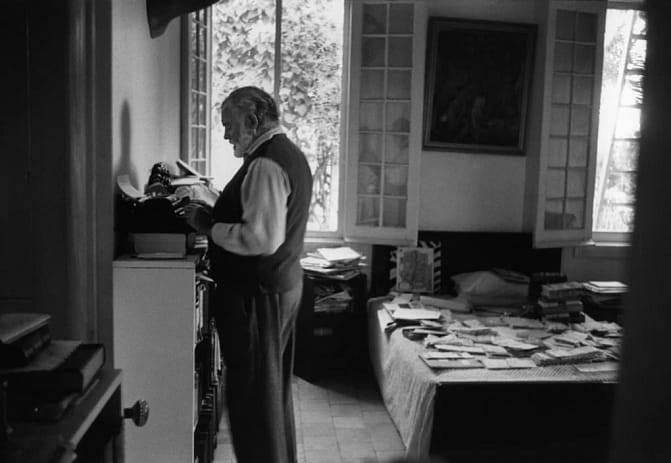
This is why simple copy is MUCH HARDER to write than complicated copy. The style of simple copywriting is also known as the Hemingway method.
“Poor Faulkner. Does he really think big emotions come from big words? He thinks I don’t know the ten-dollar words. I know them all right. But there are older and simpler and better words, and those are the ones I use.”
I shall use the legal industry as an example. For lawyers, maybe due to past restrictive advertising guidelines associated with their profession, many feel hesitant to “market” themselves.
The truth is, regardless of your industry, you have to meet your market where they are at, and NOT where you’re at.
Singaporean lawyers I speak to are often concerned about the Legal Profession (Publicity) Rules. However, if one reads both the guidelines and publicity rules carefully, there are no legal restraints on better representing your legal practice through good copy, as long as it is factual and keeps within certain boundaries.
No, it’s not about “cheapening” your brand.
Let’s face it. Today, legal advice is increasingly a commodity. You can use any of the free LLMs and they’ll be able to give you pretty intuitive advice.
Just the other day, a law firm partner on LinkedIn pointed out that financial planners are now drafting wills and competing with lawyers. I also once used ChatGPT for legal advice. I used it to phrase, edit and check my originating claim (documents to be filed in court) when I faced a legal dispute. No lawyers were involved. I had a good outcome.
For smaller practices, the way you connect with clients is what sets you apart from A.I.
The way I see it, you win clients by making the law feel approachable. That comes down to words. That comes down to copy. It means using the Hemingway Method, not legal speak.
Copywriting Skillset 4: Benefits Versus Features
Nobody cares about YOU. Everyone cares about what YOU can do for THEM.
Technical and engineering oriented entrepreneurs often go on about the numerous technical features their product or service can do. Unless your audience is already in the solution or product aware phase, you’ve got to meet them where they are at.
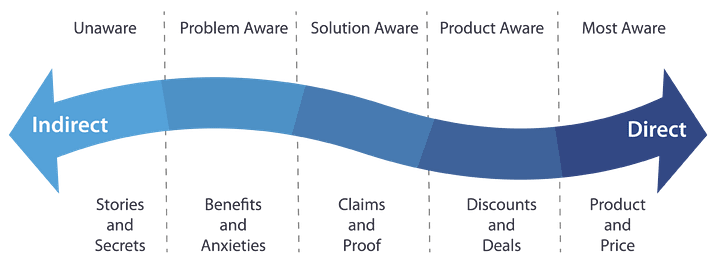
For example, a benefit driven blog post article can include showcasing case studies on your site. You can write about the process of how you got them results, stories of the obstacles you faced and how you overcame them.
Note: I don’t think every piece of marketing material has to be a lengthy essay filled with stories, benefits, claims and proof. That can end up being hard to read. Mix up your prose. Go from methodical to inspirational, serious to lighthearted, logical to emotional.
Conclusion
Learning basic direct response copywriting should be one of the core skillsets of any small to micro business owner. The copy you use can determine the kind of clients you’ll attract, the price point you can command and the type of brand you want to build.
Here’s the truth: a great product that nobody understands is just a secret you’re keeping from the world. Your work is a gift. But a gift nobody hears about is a gift nobody receives.
